The elite manager's playbook: transfers, hits, captaincy and chips for 2026/27
The Hall of Fame's disciplines only pay when they become weekly machinery. The transfer checklist the elites run, the test that decides a minus-4, captaincy by rank situation, and how to spend two chip sets. Part two of three.
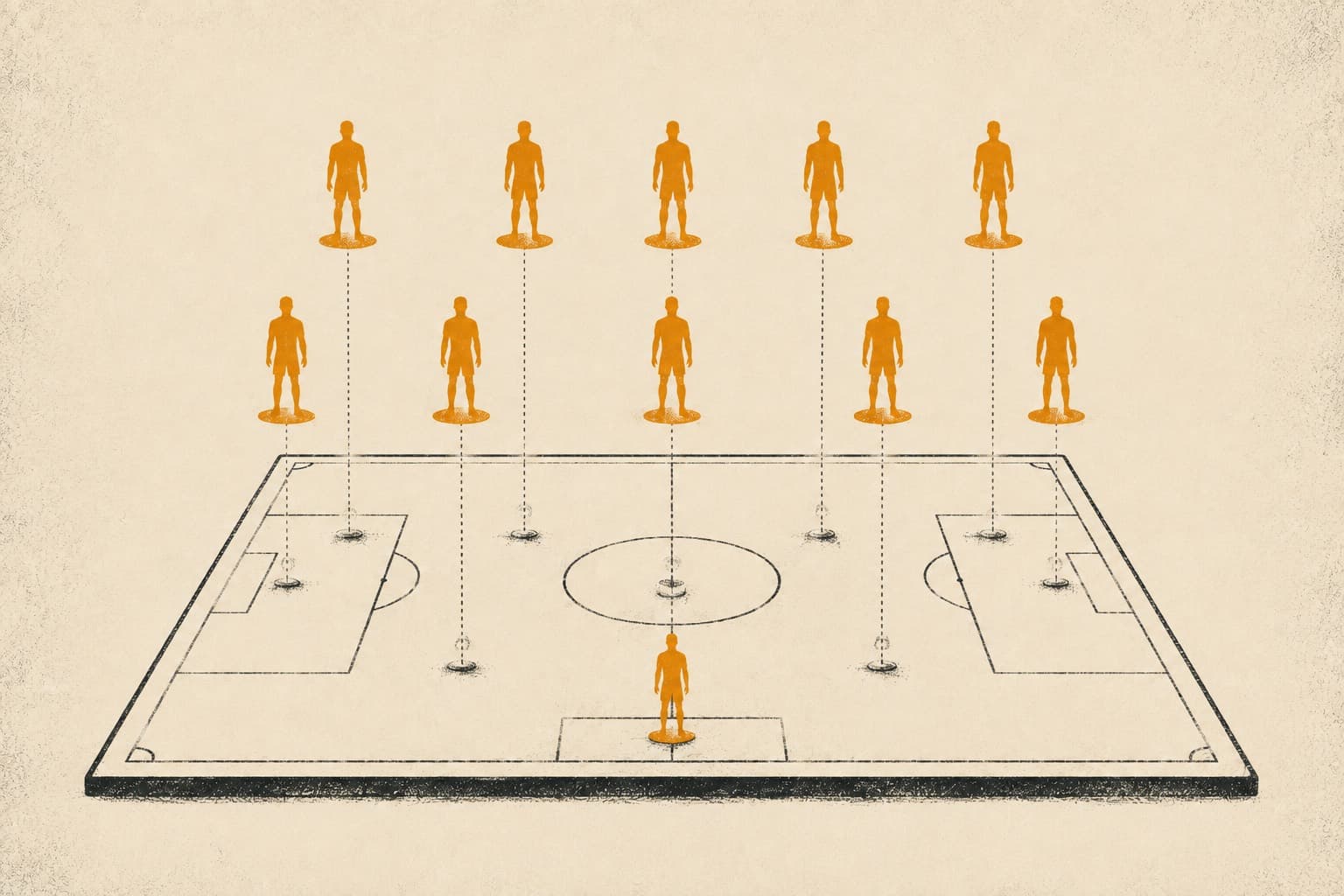
In part one we made the case that champions are partly lottery winners, and that the six disciplines of the repeat elites — no tilt, long samples, the 3–6 gameweek horizon, fresh pricing logic, minutes first, information over price moves — are the durable thing worth stealing. Disciplines are attitudes, though. They only score points when they become machinery: the checklist you run every week, the test you apply to every hit, the way you pick an armband when your league position is screaming at you.
This is that machinery, assembled from the same Hall-of-Fame and champion interviews — and tuned for the 2026/27 rules, which quietly changed the chip game more than most managers have noticed.
The short version
- Run the transfer checklist in order — most bad moves come from starting at step two
- Rolling a transfer is an active decision: ask what the extra move unlocks next week
- Hits are a price, not a sin — pay when the maths clearly beats four points
- Captaincy inputs are universal; the tie-breaker is your rank situation
- All four first-half chips expire at GW19 — hoarding for spring is now half wrong
The weekly transfer checklist
Strip the interviews down and the elite weekly routine looks remarkably consistent. Run it in order — most bad transfers come from starting at step two.
The elite weekly routine
- 1Identify forced sells first: injuries, suspensions, lost roles, upcoming blanks with no reason to hold
- 2List high-confidence buys: secure minutes, good 3–6 GW fixtures, strong team context, and a clear route to points
- 3Compare every move against simply rolling the transfer: what does the extra free transfer unlock next week?
- 4Check the opportunity cost: is this sideways? Does it block a future premium? Does it create bench headaches?
- 5Only then pick your risk mode — protect, balanced, or chase — and let it break the remaining ties
Step three deserves its own paragraph, because it's the one casual managers skip entirely: rolling a transfer is an active decision, not a passive one. With up to five free transfers now bankable, the question every week is what an extra transfer unlocks next week — a double move for a fixture swing, a chip setup, cover for a press-conference surprise. Elite managers roll on purpose, not by default. If your XI is good enough and no sell is forced, doing nothing is frequently the highest-value move on the board — but only if you've actually asked the question.
Step four catches the quieter mistakes. A sideways move — swapping one £7.0m midfielder for another with a similar projection — spends flexibility to stand still. A move that drains the exact funds you'll need for a premium in two weeks is worse than sideways. And a buy that creates a weekly benching headache between two similar players costs you decision quality every deadline after this one.
The hit test
The community treats the minus-4 as a moral failing. The Hall of Fame treats it as a price. Ballantyne is explicit: hits are not inherently bad; the objective is expected value, and hit-phobia costs points just as surely as hit-happiness does.
A hit worth taking
- The outgoing player is injured, suspended or losing his place
- The incoming player is a genuine captaincy candidate
- One move fixes several problems: structure, fixtures, chip path
- The expected gain over 2–4 gameweeks clearly beats four points, with room for error
A hit worth refusing
- The honest motivation is last week's scoreboard
- The incoming player's minutes are not secure
- The move will probably be reversed within a fortnight
- It burns a transfer or chip route worth more than the short-term gain
The strongest hits fix more than one problem at once — an injury, a fixture cliff and a captaincy gap in a single move. The weakest buy a one-week haul with no role change behind it. If you're honest about which column your move sits in, the minus-4 decision mostly makes itself.
Captaincy, by mode
Captaincy is the highest-frequency leverage decision in the game — a huge share of a season's points flows through the armband. The elite inputs are consistent regardless of who you ask: expected minutes, penalty and set-piece duty, the team's implied goals from the betting markets, the player's shot and box-touch profile, the opponent's defensive quality, rotation risk — and then, last but decisively, your situation.
- Protecting a lead: captain the highest-projected heavily-owned option unless there's a real minutes or role concern. Differential captaincy because matching the field feels boring is how leads die.
- Balanced: captain the highest projection after minutes risk, and use ownership only to break ties.
- Chasing: consider a lower-owned captain only when the projection gap to the popular pick is small or the ceiling is meaningfully higher. The best differential captains are good picks first and differentials second — low ownership alone is not a thesis.
The deeper point, which our captaincy article builds on: the same armband can be right for you and wrong for the manager one place above you. That's not a paradox; it's the whole game.
Chips under the 2026/27 rules
First half, GW1–19. Wildcard when the squad has a structural expected-points deficit or a fixture swing demands a reshape — never after one bad week. Free Hit when a single gameweek's schedule is so distorted that a one-week squad clearly beats your real one. Triple Captain on a premium with excellent fixture and minutes confidence, taken when the opportunity appears rather than saved into a corner. Bench Boost when your bench is naturally playable — resist building an expensive bench just to chase the chip, because it taxes your XI for weeks either side.
Second half, GW20–38. The classical logic returns. Wildcard gains value around fixture rescheduling and late-season role changes. Free Hit is strongest in severe blanks or concentrated doubles. Triple Captain wants a talisman with a double or an elite home fixture. Bench Boost wants the 15-playable-players squad you typically only have just after a Wildcard — sequencing the two together remains the cleanest pattern in the game.
Squad structure, position by position
Goalkeepers: low opportunity cost usually wins. Rotation pairings can work, but only when the saving is real and the weekly choice isn't a coin-flip headache. This year's bonus-system tweak may nudge keeper value upward — but don't pay for that theory until the evidence lands.
Defenders: favour multiple routes — attacking involvement, set pieces, clean-sheet odds, and now the defensive-contribution profile. Expensive defenders must justify themselves through more than clean sheets. Cheap starting defenders are quietly more valuable than ever, because they enable both Bench Boost and budget flexibility.
Midfielders: historically the game's most efficient position — midfield goals outscore forward goals, and a clean sheet adds an extra point. Prioritise penalties, set pieces, advanced roles, 90-minute security, and strong team attacks. This is where captaincy flexibility lives.
Forwards: goals are the route, so penalties, minutes and team chance-quality dominate. Mid-priced forwards beat premiums whenever pricing makes the premium's opportunity cost too heavy — which, this season, is a live question at exactly one price point.
The bench: a completely dead bench makes every injury a crisis; an expensive bench quietly bleeds funds from your XI. The right strength tracks your squad's rotation risk, the schedule's density, and when you plan to Bench Boost. And bench order is its own decision — one the elites don't leave to default.
That's the machinery. In part three: the academic evidence that FPL is a skill game at all — and the list of things you should actively refuse to learn from champions.
Keep reading
FPL GW1 squad 2026/27: our current £100.0m draft
SmartPlay's current 15-player GW1 draft: Haaland captain, a 3-5-2, the full bench order, the model's trade-offs and every assumption to recheck before the deadline.
Stop copying the champion: the six disciplines of the FPL Hall of Fame
Every August the same articles appear — how last year's winner built their team. The uncomfortable truth is that champions are partly lottery winners. Here are the six disciplines the repeat elites actually share. Part one of three.
When is a transfer actually worth four points?
A hit is not simply incoming xPts minus four. The real comparison includes the player you sell, the planning horizon, captaincy, and the value of waiting.